
Eesti mõisad ja lossid: Third volume on Estonian Manor Architecture by Juhan Maiste
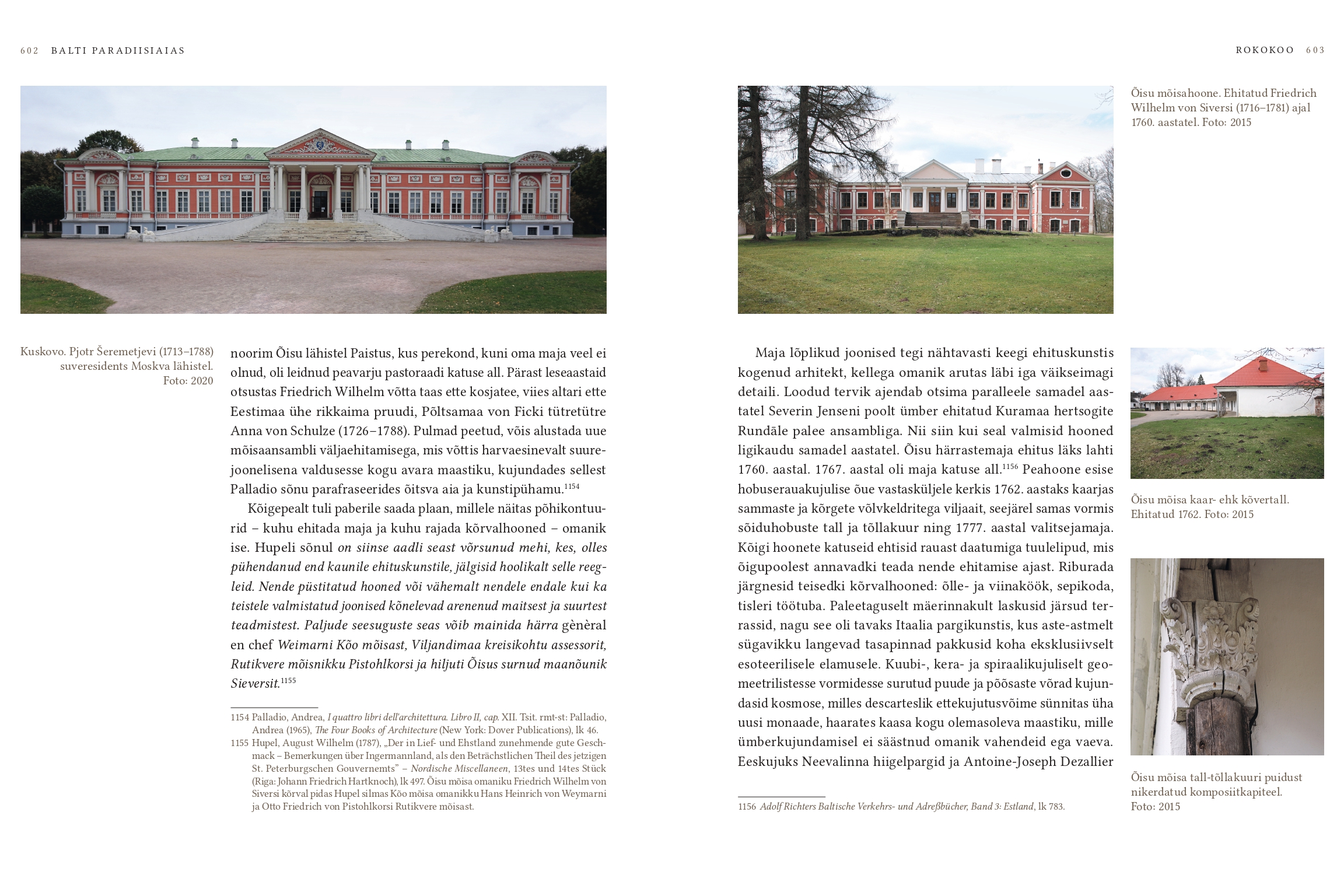
Eesti mõisad ja lossid III Aadlikultuuri seitse aastasada is the third volume by Juhan Maiste on Estonian manor architecture, covering the period from the Middle Ages to the Great Northern War. This volume is dedicated to the heyday of manor architecture in the 18th century. Having sworn allegiance to the new power, the local elite embraced the call of the new era and had their homes built by architects and master builders from abroad. Like a jewel box rising in the midst of a park in the Italian and French formal styles, the manor house fused artistic life and spirit, allowing the nobility to shut themselves away behind its walls at a time when the winds of revolution were sweeping across Europe. As one of the last blue-blooded oases in Europe, the manor hosted an opera whose musical score originated from the Versailles of Louis XIV’s era and whose libretto was written in the great artistic metropolises of Dresden, Berlin, and St. Petersburg. Having been educated in Germany and travelled through Switzerland and Italy, the family’s son returned home for Christmas to find a decorated Christmas tree in the hall and candles lit in the rooms. Though they had become Europeans, they remained Livonians at heart, as evidenced not only by the grand Rococo-style palaces in Põltsamaa, Vääna, and Õisu, but also by the good old Baltic-style wooden manor houses in Esna, Riidaja, and Loodi.
For further information see: https://varrak.ee/raamat/eesti-moisad-ja-lossid-iii/